Description
Combined Research Mechanism Profile
TB-500 and BPC-157 have been investigated through different but potentially complementary experimental pathways. BPC-157 research has explored signaling associated with vascular responses, nitric oxide pathways, cellular migration, and growth-factor-related mechanisms.
TB-500-related research has focused on actin regulation, cytoskeletal organization, and cell-migration processes. Actin is a major structural protein involved in cellular shape, movement, and intracellular organization.
A combined research format allows investigators to study both compounds within the same experimental framework and examine molecular or cellular responses associated with multiple pathways.
These mechanisms remain areas of preclinical investigation and should not be interpreted as established therapeutic effects.
BPC-157 Research Profile
BPC-157 is a synthetic pentadecapeptide composed of 15 amino acids. It has been investigated in preclinical research involving cellular signaling, endothelial responses, angiogenic pathways, gastrointestinal experimental models, and tissue-remodeling mechanisms.
Experimental studies have explored potential interactions with nitric oxide signaling, vascular endothelial growth factor-associated pathways, and cellular migration.
The precise biological mechanisms of BPC-157 continue to be investigated, and findings from laboratory or animal models do not establish clinical effects in humans.
TB-500 Research Profile
TB-500 is used in research related to thymosin beta-4-associated biological pathways. Experimental investigation has examined mechanisms involving actin binding, cytoskeletal dynamics, and cellular migration.
The actin cytoskeleton plays an important role in cellular structure, motility, and organization. Research involving TB-500-related peptides can help characterize how these pathways respond under controlled experimental conditions.
TB-500 remains an investigational research compound, and references to cellular or tissue-response mechanisms describe scientific research rather than therapeutic benefits.
Cell Migration & Cytoskeletal Research
Cell migration depends on coordinated changes in the cytoskeleton, cellular adhesion, and signaling networks. Actin dynamics are particularly important to these processes.
TB-500-related research has investigated actin-associated pathways, while BPC-157 research has examined cellular migration and vascular signaling in preclinical models.
The combination provides researchers with an experimental platform for studying these distinct pathways together under defined laboratory conditions.
Angiogenesis & Vascular Signaling Research
Angiogenesis is the biological process through which new vascular structures develop from existing blood vessels. Multiple signaling molecules, endothelial responses, and growth-factor pathways participate in this process.
BPC-157 has been investigated in preclinical models involving vascular and angiogenic signaling. TB-500-related research has also examined cellular migration and biological processes relevant to vascular research.
These research areas contribute to scientific understanding of vascular biology and cellular signaling. They do not establish that this research product can treat, repair, or regenerate human tissue.
Tissue-Response Research
Both BPC-157 and TB-500-related compounds have been investigated in experimental models examining biological responses to tissue stress and cellular remodeling.
Research may evaluate fibroblast behavior, cellular migration, cytoskeletal changes, vascular responses, and molecular signaling under controlled conditions.
A dual-peptide research format can be useful when investigators wish to characterize how separate peptide-associated pathways behave within the same experimental model.
References to tissue response or remodeling are descriptions of research categories and are not claims of medical efficacy.
Dual-Peptide Research Significance
Combining TB-500 and BPC-157 in one research formulation provides a platform for investigating two peptide-associated pathways within a single experimental arm.
Researchers may compare the combination with individual compounds to examine whether cellular signaling, migration, or other measured experimental markers differ between single-compound and combined conditions.
Any potential additive or interactive effects must be established experimentally and should not be assumed from the presence of both compounds.
Laboratory Research Applications
The TB-500 + BPC-157 combination may be investigated in appropriately designed laboratory research involving peptide biology and cellular signaling.
- Cell migration research: Investigation of molecular pathways associated with cellular movement.
- Cytoskeletal research: Study of actin-related signaling and cellular organization.
- Vascular research: Experimental investigation of endothelial and angiogenic signaling pathways.
- Cellular signaling: Characterization of intracellular and extracellular responses in controlled models.
- Tissue-response research: Investigation of molecular and cellular remodeling pathways.
- Comparative peptide research: Comparison of combined and individual peptide conditions.
These represent scientific research categories and are not recommendations for clinical, veterinary, or personal use.
Vial Specifications
|
Property |
Specification |
|
Product Name |
TB-500 + BPC-157 |
|
Brand |
Sigma Bionics |
|
Compound Type |
Dual research peptide combination |
|
Active 1 |
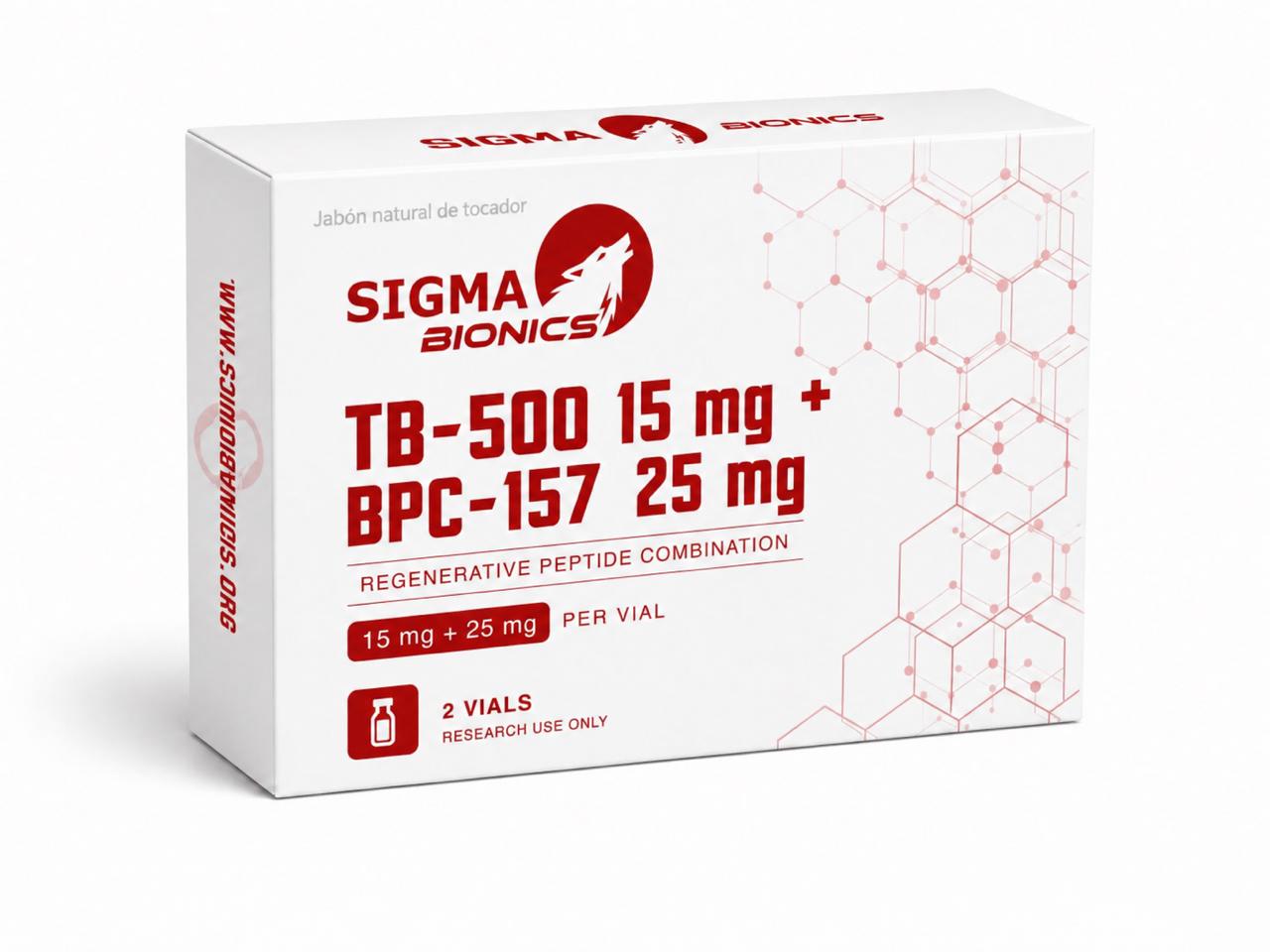
TB-500 – 15 mg |
|
Active 2 |
BPC-157 – 25 mg |
|
Combined Strength |
40 mg total per vial |
|
Package Size |
2 vials per box |
|
Intended Application |
Laboratory research |
|
Use Classification |
Research Use Only |