Description
BPC-157 Research Mechanism Profile
BPC-157 has been investigated primarily in preclinical experimental models examining cellular and tissue-response mechanisms.
Research has explored possible interactions between BPC-157 and signaling systems associated with angiogenesis, endothelial function, nitric oxide pathways, cellular migration, and extracellular matrix responses.
Studies have also investigated signaling involving vascular endothelial growth factor (VEGF) and related pathways. These mechanisms are of scientific interest because they participate in vascular biology, cellular communication, and tissue remodeling.
The precise biological mechanisms associated with BPC-157 remain an active area of research, and findings from experimental models should not be interpreted as established therapeutic effects in humans.
BPC-157 Molecular Research Profile
BPC-157 is a synthetic peptide composed of 15 amino acids and is therefore classified as a pentadecapeptide.
The sequence studied as BPC-157 has been investigated experimentally for its biological stability and activity across several laboratory models. Its relatively compact peptide structure has made it useful in research examining peptide-mediated signaling and cellular responses.
Scientific investigations involving BPC-157 remain predominantly preclinical. Researchers continue to examine its molecular interactions, signaling characteristics, and potential effects across different experimental systems.
Why BPC-157 Is Studied
BPC-157 has generated scientific interest because preclinical studies have investigated the peptide across several biological systems. Research areas have included cellular migration, vascular signaling, angiogenic pathways, gastrointestinal experimental models, connective-tissue responses, and inflammatory signaling.
Researchers may use BPC-157 to investigate how peptide-mediated signaling influences cellular behavior under controlled experimental conditions. These investigations contribute to the broader scientific understanding of peptide biology and tissue-response mechanisms.
Cellular Signaling Research
Cellular signaling involves complex communication networks that regulate how cells respond to their surrounding environment.
BPC-157 has been investigated in experimental research examining several signaling pathways associated with cellular migration, vascular responses, and tissue remodeling. Preclinical research has explored potential interactions involving nitric oxide signaling and growth-factor-associated pathways.
Understanding these interactions may help researchers characterize how BPC-157 influences cellular responses within specific laboratory models.
Angiogenesis & Vascular Research
Angiogenesis describes the biological process through which new blood vessels develop from existing vascular structures.
BPC-157 has been investigated in preclinical models examining vascular and angiogenic signaling. Research has explored its relationship with pathways involving vascular endothelial growth factor and endothelial cellular responses.
These experimental observations have contributed to scientific interest in BPC-157 as a research compound for studying vascular biology and cellular signaling. They should not be interpreted as evidence that this Sigma Bionics research product can prevent, treat, or heal any medical condition.
Gastrointestinal Research
BPC-157 has also been investigated extensively in experimental gastrointestinal models.
Researchers have examined peptide-related signaling in models involving gastrointestinal tissue responses, mucosal biology, vascular mechanisms, and cellular protective pathways. These investigations have contributed to the peptide’s prominence within experimental peptide research.
However, results observed in laboratory and animal models cannot automatically be translated into established clinical effects in humans.
Tissue-Response Research
A significant portion of BPC-157 research involves experimental models examining biological responses following tissue stress or injury.
Researchers have studied cellular migration, fibroblast-related activity, vascular responses, and signaling mechanisms involved in tissue remodeling. Such research can help scientists better understand the molecular pathways involved in cellular repair processes.
BPC-157 remains an investigational research peptide, and references to tissue-response pathways describe areas of scientific study rather than therapeutic benefits.
Laboratory Research Applications
BPC-157 may be investigated in appropriately designed laboratory research involving peptide biology, cellular signaling, and tissue-response pathways.
- Cellular signaling: Investigation of intracellular and extracellular signaling pathways associated with peptide exposure.
- Angiogenesis research: Experimental investigation of vascular and endothelial signaling mechanisms.
- Cell migration research: Study of cellular movement and associated signaling pathways.
- Gastrointestinal research: Investigation within controlled gastrointestinal experimental models.
- Tissue-response research: Examination of molecular and cellular responses within preclinical models.
- Peptide research: Characterization and comparison of peptide-mediated biological signaling.
These represent scientific research categories and are not recommendations for clinical, veterinary, or personal use.
Vial Specifications
|
Property |
Specification |
|
Product Name |
BPC-157 |
|
Brand |
Sigma Bionics |
|
Compound Type |
Synthetic research peptide |
|
Peptide Class |
15-amino-acid pentadecapeptide |
|
Research Areas |
Cellular signaling, vascular and tissue-response research |
|
Strength |
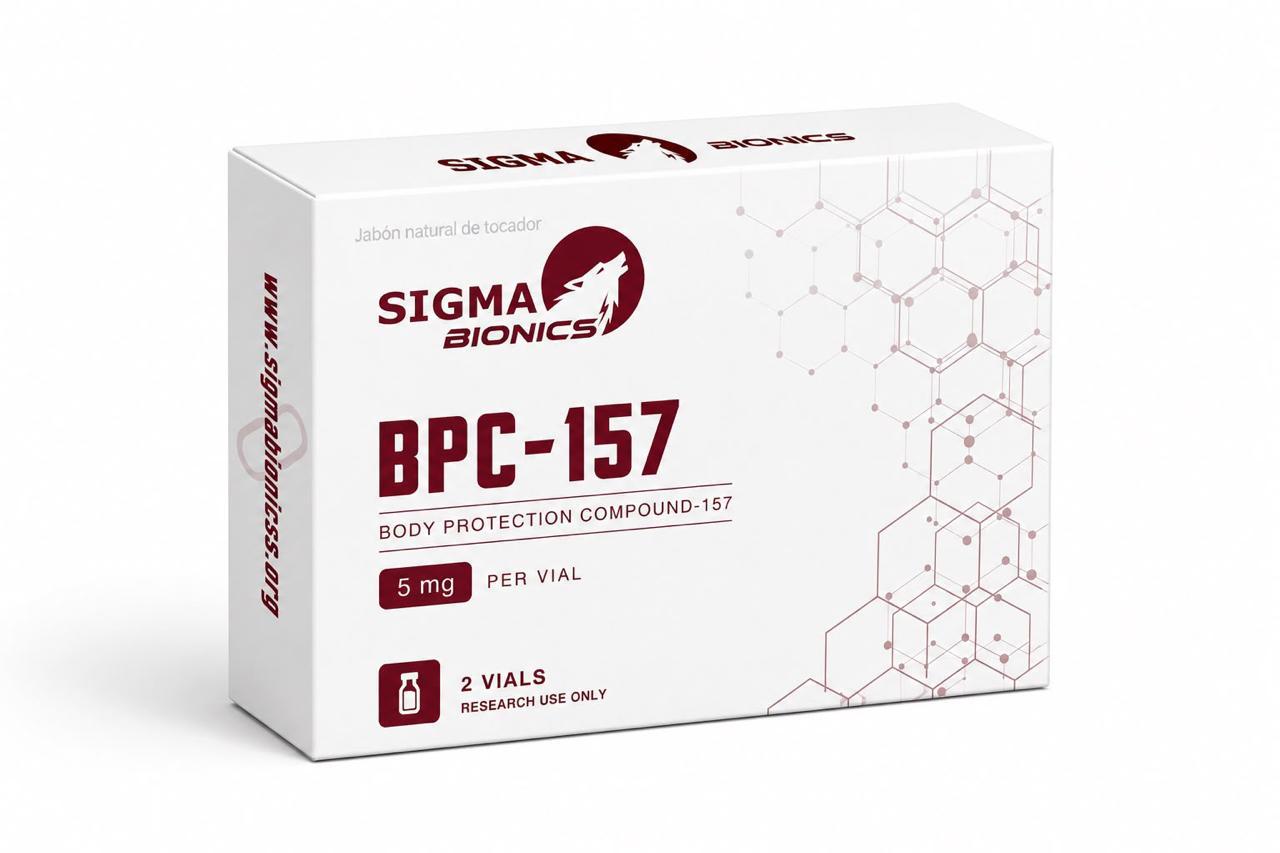
5 mg per vial |
|
Package Size |
2 vials per box |
|
Intended Application |
Laboratory research |
|
Use Classification |
Research Use Only |