Description
TB-500 Research Mechanism Profile
TB-500-related research has investigated pathways associated with actin, a major structural protein involved in cellular shape, movement, and organization. Actin exists in dynamic forms that allow cells to reorganize their internal structure during migration and other cellular processes.
Thymosin beta-4 is known for its interaction with actin, and TB-500-related experimental research has examined how these pathways may influence cytoskeletal behavior and cellular migration.
Researchers may use TB-500 in controlled experimental systems to characterize actin-associated signaling, cellular motility, and related molecular responses.
These mechanisms remain areas of scientific investigation and should not be interpreted as established therapeutic effects.
TB-500 Molecular Research Profile
TB-500 is associated with research into thymosin beta-4-related biological activity. Thymosin beta-4 is a naturally occurring peptide that participates in actin regulation and has been studied across multiple cellular systems.
The relationship between thymosin beta-4 and actin is of particular interest because actin dynamics are fundamental to cell structure, migration, and intracellular organization.
Research involving TB-500-related peptides contributes to the broader scientific characterization of peptide-mediated cytoskeletal signaling and cellular behavior.
Why TB-500 Is Studied
TB-500 has generated scientific interest because thymosin beta-4-related pathways participate in several fundamental cellular processes.
Research areas have included actin regulation, cellular migration, cytoskeletal organization, endothelial responses, and cellular remodeling mechanisms. Researchers may investigate TB-500-related activity to better understand how peptide-associated signaling influences cell movement and structural organization under controlled laboratory conditions.
These studies contribute to scientific understanding of cellular biology rather than establishing clinical benefits for this research product.
Actin & Cytoskeletal Research
The cytoskeleton provides structural support to cells and plays an essential role in movement, shape, and intracellular organization. Actin is one of its major components.
Thymosin beta-4-related research has examined mechanisms associated with actin binding and regulation. TB-500 provides researchers with an experimental compound for studying these pathways within controlled models.
Laboratory studies may examine changes in cytoskeletal organization, cellular morphology, and actin-associated signaling following experimental exposure.
Cell Migration Research
Cell migration is a complex biological process involving cytoskeletal rearrangement, adhesion mechanisms, and coordinated molecular signaling.
Because thymosin beta-4-related pathways are associated with actin regulation, TB-500 has been investigated in experimental models involving cellular motility and migration.
Researchers may use these models to characterize molecular events that occur as cells reorganize and move within defined laboratory environments.
References to cell migration describe research mechanisms and do not imply a therapeutic effect in humans or animals.
Vascular & Endothelial Research
TB-500-related compounds have also been investigated in preclinical models involving endothelial cells and vascular-associated signaling.
Endothelial cells depend on cytoskeletal dynamics and cellular migration during several biological processes. Experimental research may therefore examine how thymosin beta-4-related pathways interact with endothelial cellular behavior.
These studies contribute to the broader scientific understanding of vascular biology, cellular migration, and peptide-associated signaling.
Cellular Remodeling Research
Cellular remodeling involves coordinated changes in cell structure, migration, and extracellular interactions. Cytoskeletal proteins such as actin are central to many of these processes. TB-500-related research may examine cellular responses under experimental conditions involving structural change or biological stress.
Such studies can help characterize peptide-associated molecular pathways involved in cellular organization and remodeling. These research areas should not be interpreted as claims that the product repairs or regenerates human tissue.
Laboratory Research Applications
- TB-500 may be investigated in appropriately designed laboratory research involving peptide biology, cytoskeletal signaling, and cellular behavior.
- Actin research: Investigation of pathways associated with actin regulation and organization.
- Cytoskeletal research: Study of cellular structural dynamics and related molecular signaling.
- Cell migration research: Experimental investigation of cellular motility and movement.
- Endothelial research: Study of vascular-associated cellular responses in preclinical models.
- Cellular remodeling research: Investigation of structural and signaling changes under controlled conditions.
- Peptide research: Characterization of thymosin beta-4-related biological pathways.
These represent scientific research categories and are not recommendations for clinical, veterinary, or personal use.
Vial Specifications
|
Property |
Specification |
|
Product Name |
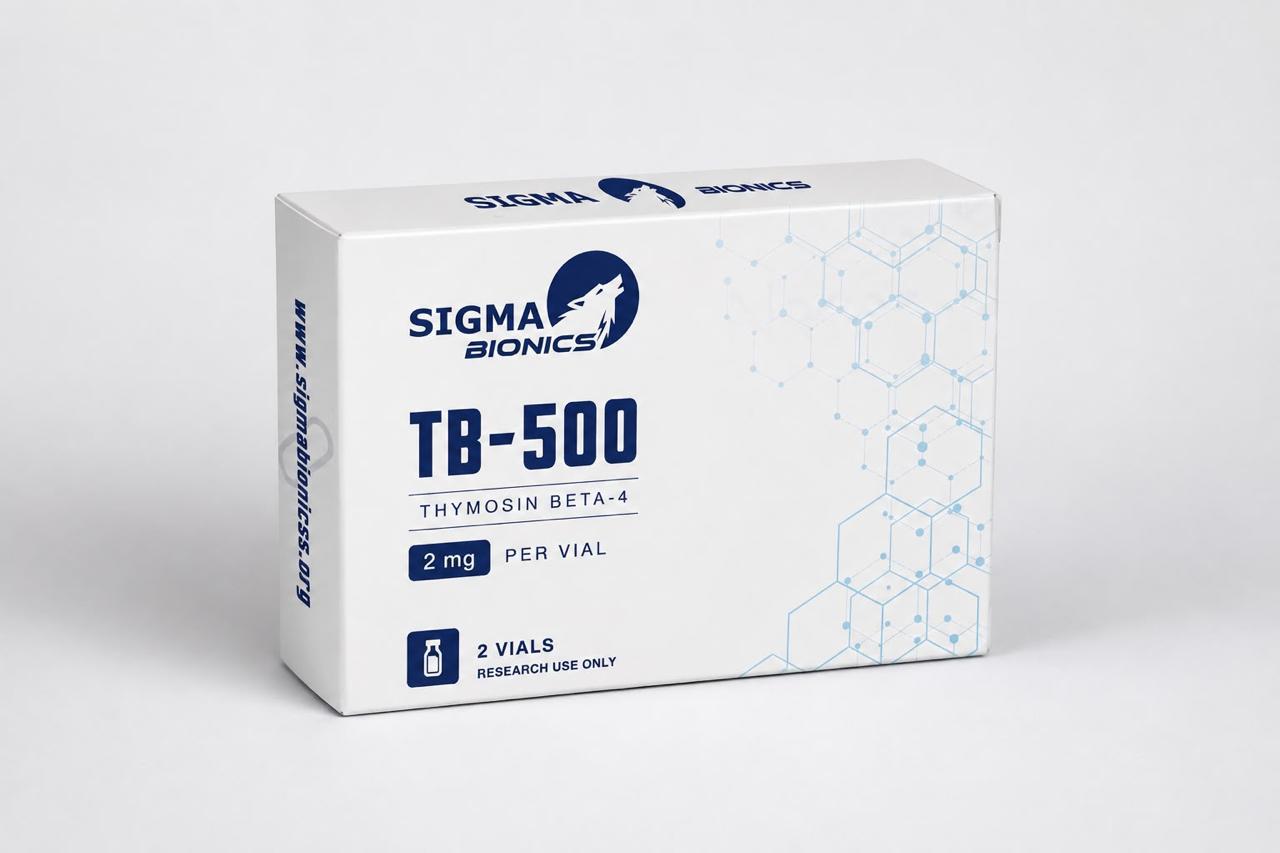
TB-500 |
|
Brand |
Sigma Bionics |
|
Compound Type |
Synthetic research peptide |
|
Research Class |
Thymosin beta-4-related research peptide |
|
Research Areas |
Actin dynamics, cytoskeletal signaling and cell migration |
|
Strength |
2 mg per vial |
|
Package Size |
2 vials per box |
|
Intended Application |
Laboratory research |
|
Use Classification |
Research Use Only |