Description
Ipamorelin Research Mechanism Profile
Ipamorelin has been investigated as an agonist of the growth hormone secretagogue receptor type 1a (GHS-R1a). This receptor belongs to the G-protein-coupled receptor family and is involved in endocrine signaling pathways associated with growth hormone secretion.
Experimental activation of GHS-R1a can initiate intracellular signaling in pituitary and hypothalamic systems. Researchers have used secretagogue peptides such as Ipamorelin to characterize receptor activation, downstream signaling, and growth hormone secretory responses under controlled laboratory conditions.
Ipamorelin is of particular research interest because preclinical studies have examined its receptor selectivity and endocrine signaling profile relative to other growth hormone secretagogues.
These mechanisms describe areas of scientific research and should not be interpreted as therapeutic or performance claims.
Ipamorelin Molecular Research Profile
Ipamorelin is a synthetic pentapeptide developed for research involving growth hormone secretagogue receptor pathways. Its relatively small peptide structure makes it useful for experimental investigation of peptide-receptor interactions and endocrine signaling.
The growth hormone secretagogue receptor is also activated by the endogenous hormone ghrelin. Synthetic secretagogues provide researchers with additional tools for examining receptor pharmacology and downstream cellular responses.
Laboratory investigation of Ipamorelin contributes to the broader characterization of GHS-R1a signaling, pituitary responses, and peptide-mediated endocrine mechanisms.
Why Ipamorelin Is Studied
Ipamorelin has generated scientific interest because it can be used to investigate growth hormone secretagogue receptor signaling in controlled experimental systems. Research areas include receptor pharmacology, pituitary signaling, growth hormone secretory pathways, endocrine feedback mechanisms, and comparisons among different growth hormone secretagogues.
Researchers may also investigate differences in receptor selectivity and signaling behavior between Ipamorelin and other peptides acting within the growth hormone secretagogue pathway.
These studies contribute to scientific understanding of peptide-mediated endocrine signaling rather than establishing clinical benefits for this research product.
GHS-R1a Receptor Research
The growth hormone secretagogue receptor type 1a, commonly abbreviated GHS-R1a, is a G-protein-coupled receptor involved in multiple physiological signaling pathways. Ghrelin is its naturally occurring endogenous ligand.
Ipamorelin has been studied as a synthetic agonist of this receptor. Laboratory models may investigate receptor binding, activation, intracellular signaling, and downstream endocrine responses following experimental exposure.
Such research helps characterize how synthetic peptide ligands interact with GHS-R1a and how receptor activation influences signaling within endocrine systems.
Growth Hormone Secretagogue Research
Growth hormone secretagogues are compounds investigated for their ability to activate signaling pathways associated with growth hormone secretion. They can act through receptor systems that differ from the growth hormone-releasing hormone receptor pathway.
Ipamorelin belongs to this research class and has been used experimentally to study secretagogue-mediated signaling. Researchers may compare Ipamorelin with other secretagogues to characterize differences in receptor activity, signaling kinetics, and downstream cellular responses.
References to growth hormone secretion describe experimental mechanisms and do not represent recommendations for administration or enhancement purposes.
Endocrine Signaling Research
Endocrine signaling involves coordinated communication among the hypothalamus, pituitary gland, and peripheral tissues. Peptide hormones and their receptors play important roles in these signaling networks.
Ipamorelin provides researchers with a synthetic peptide tool for investigating growth hormone secretagogue receptor activity within experimental endocrine systems.
Laboratory studies may evaluate receptor activation, signaling kinetics, pituitary cellular responses, and interactions with broader endocrine pathways under controlled conditions.
Comparative Peptide Research
Growth hormone-related research includes multiple peptide classes that operate through different receptor pathways. GHRH-related peptides primarily target the growth hormone-releasing hormone receptor, while secretagogue peptides such as Ipamorelin act through GHS-R1a.
This distinction makes Ipamorelin useful in comparative laboratory research examining how different receptor systems influence growth hormone-related signaling.
Researchers can use appropriately designed experimental models to compare receptor activation, cellular signaling, and endocrine responses among different peptide classes.
Laboratory Research Applications
Ipamorelin may be investigated in appropriately designed laboratory research involving peptide pharmacology, receptor signaling, and endocrine biology.
- GHS-R1a receptor research: Investigation of interactions with the growth hormone secretagogue receptor.
- Cell signaling: Study of intracellular pathways following receptor activation.
- Endocrine research: Investigation of peptide-mediated hypothalamic and pituitary signaling.
- Growth hormone secretagogue research: Experimental characterization of secretagogue-related pathways.
- Comparative peptide research: Comparison with other secretagogue and GHRH-related research peptides.
- Peptide pharmacology: Characterization of receptor activity and signaling behavior under controlled laboratory conditions.
These represent scientific research categories and are not recommendations for clinical, veterinary, or personal use.
Vial Specifications
|
Property |
Specification |
|
Product Name |
Ipamorelin |
|
Brand |
Sigma Bionics |
|
Compound Type |
Synthetic research peptide |
|
Peptide Class |
Growth hormone secretagogue research peptide |
|
Primary Research Target |
Growth hormone secretagogue receptor (GHS-R1a) |
|
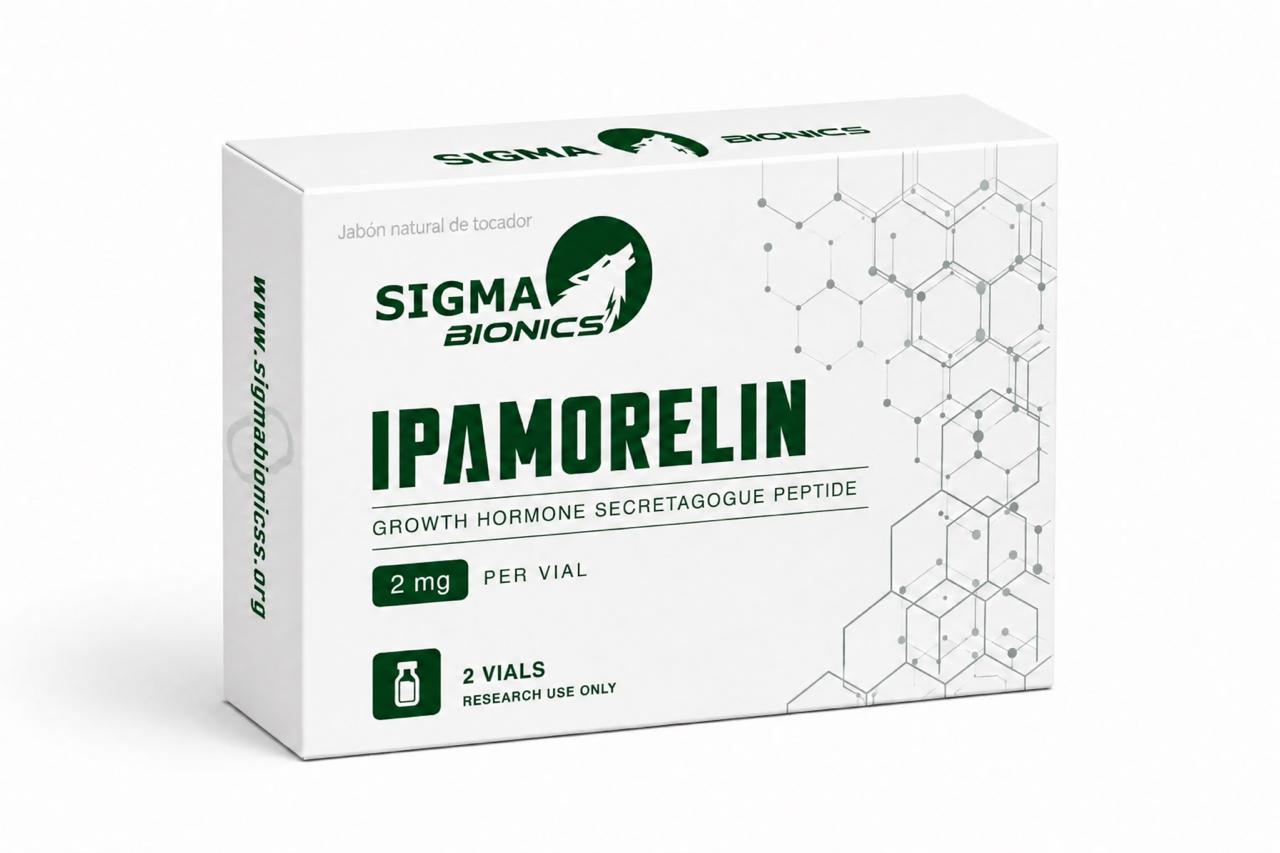
Strength |
2 mg per vial |
|
Package Size |
2 vials per box |
|
Intended Application |
Laboratory research |
|
Use Classification |
Research Use Only |